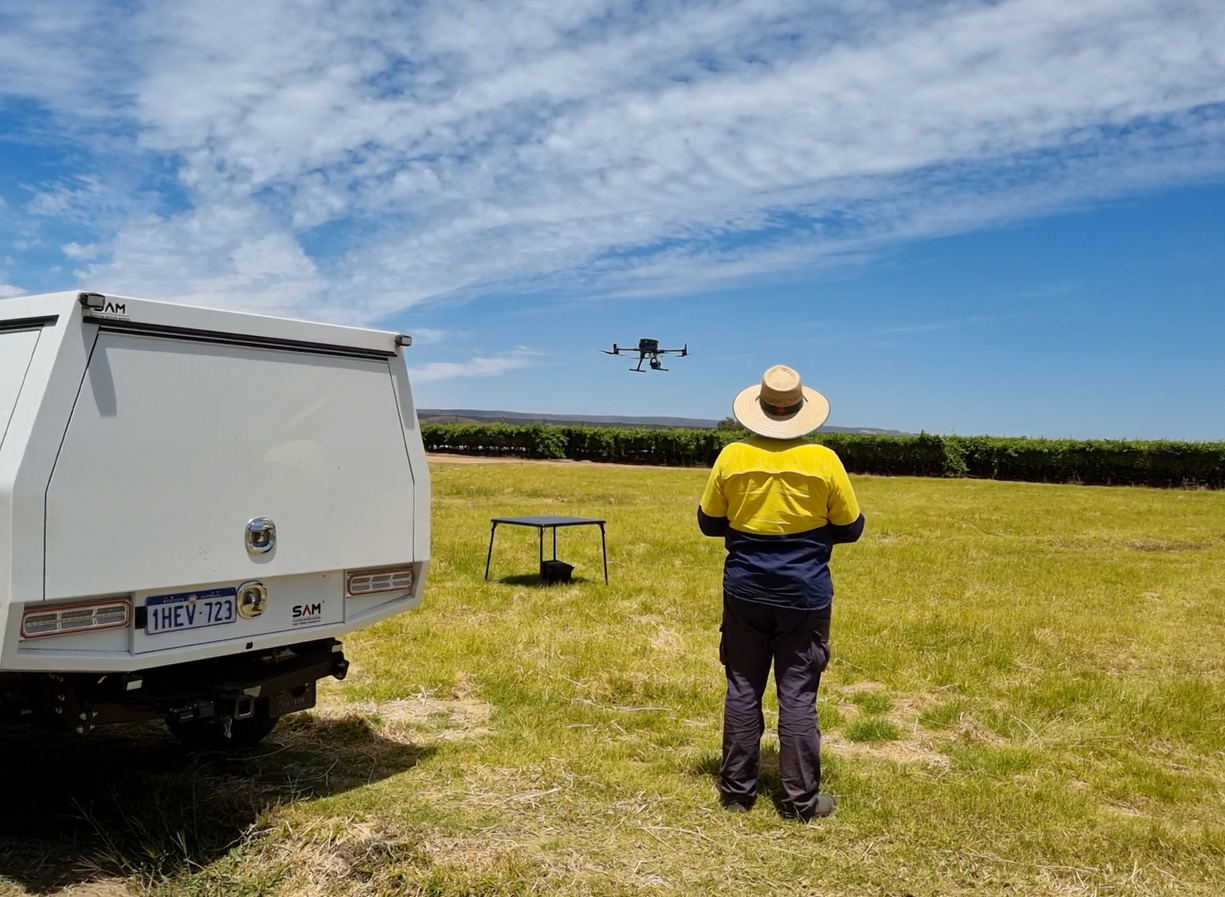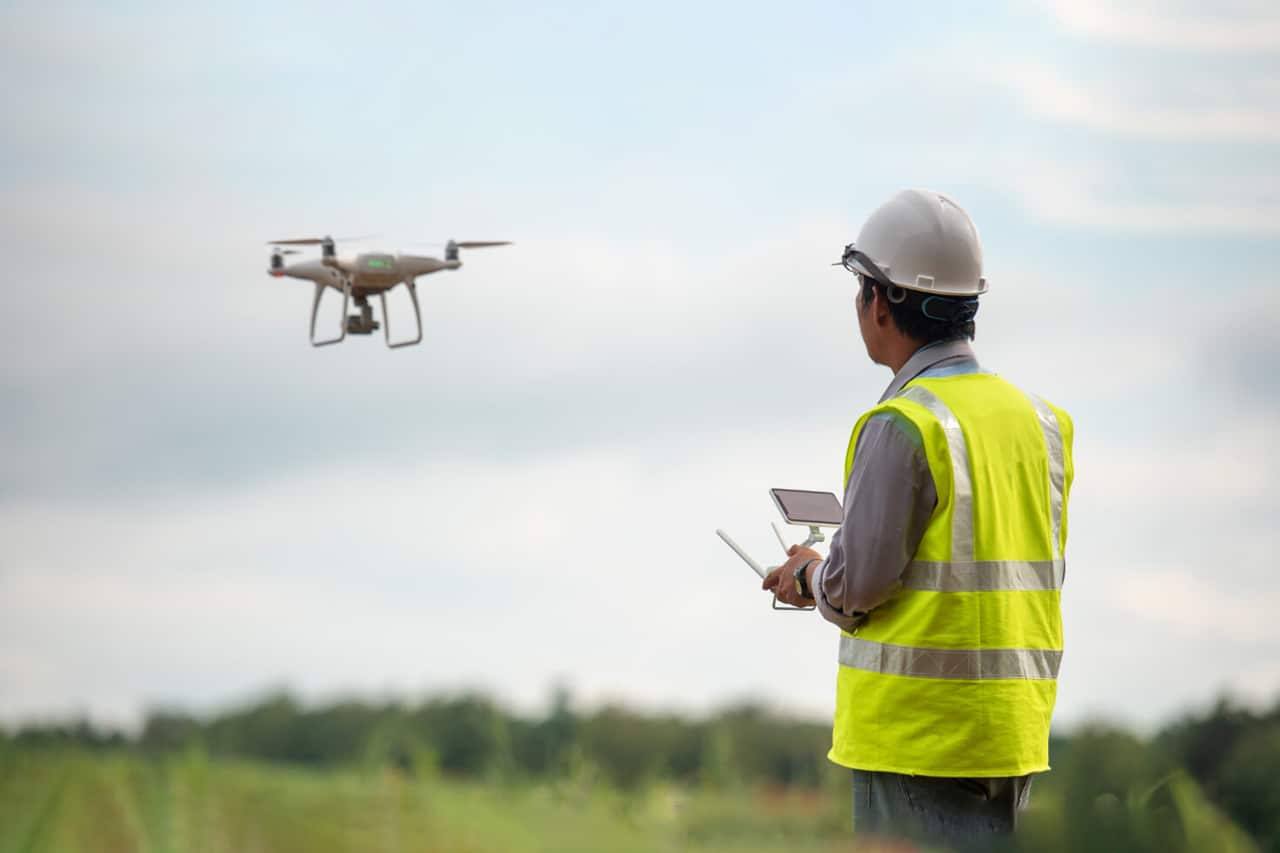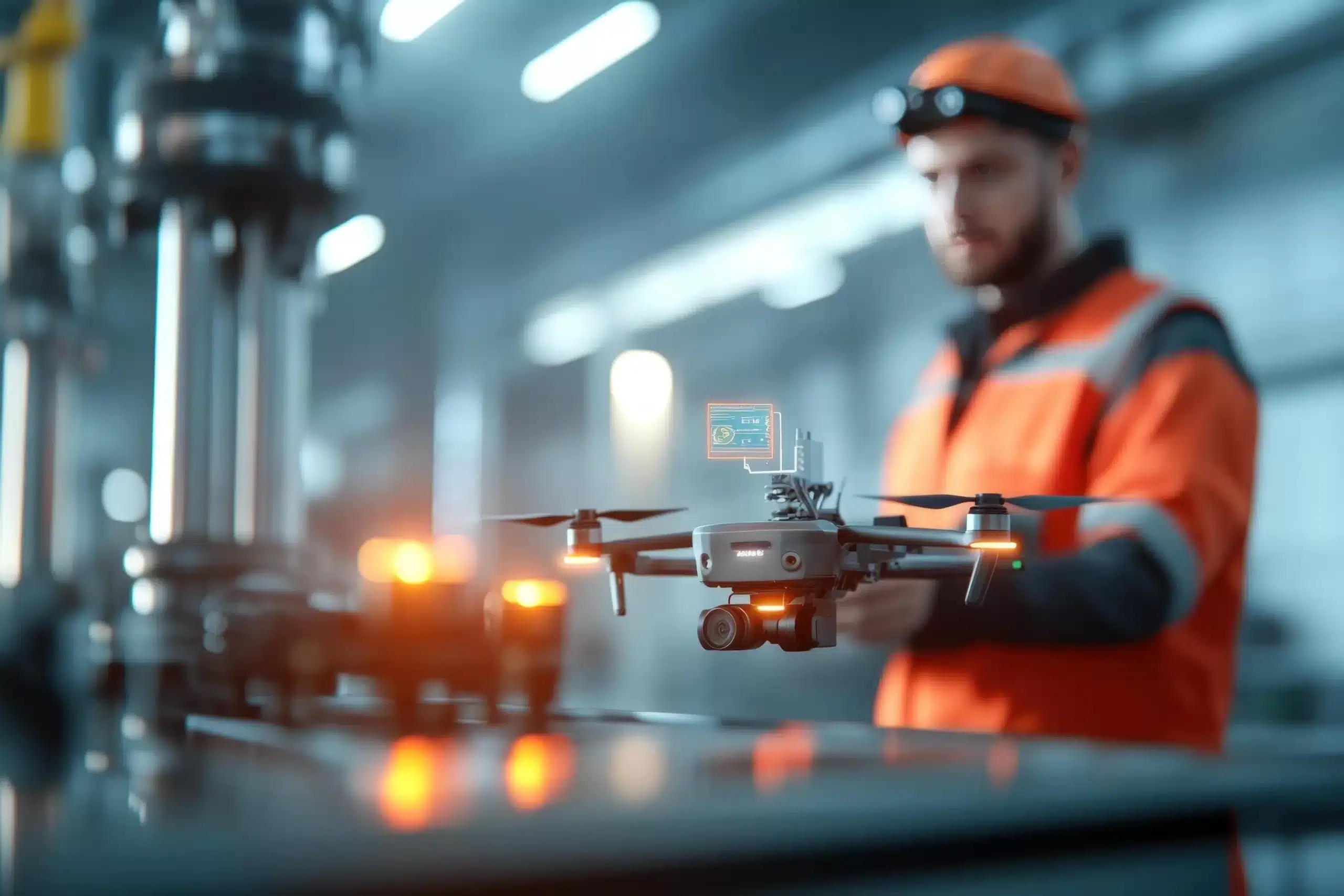
Industrial assets don’t forgive sloppy work. Pipes corrode, bearings overheat, bolts loosen, and a missed defect today can become tomorrow’s outage. Drones have stepped into this world with a simple promise: keep people out of harm’s way while collecting better data, faster, and at a lower whole-of-life cost. That mix explains why drones now sit alongside ropes, lifts and cherry pickers in inspection plans.
Safety first, with fewer shutdowns
Traditional inspection often means scaffolds, confined space entries, and working at height. These tasks carry risk and typically require isolations and stoppages. By contrast, a drone with RGB, thermal or LiDAR payloads can scan a flare stack, tank roof or conveyor gallery from standoff distances while the plant keeps running. Multiple case studies report no-shutdown flare stack surveys and quicker defect detection because thermal anomalies stand out immediately. The same approach applies to kilns, chimneys and live electrical gear where heat, height and tight access would otherwise slow teams down. For specialist work, bringing in a Perth surveyor with UAV experience can streamline compliance and local approvals.
Data that engineers trust
Good inspections are about repeatable measurements, not pretty pictures. Photogrammetry and LiDAR from drones produce accurate 3D models, enabling true-to-scale measurements of cracks, spalling, corrosion arcs and stockpiles. Peer-reviewed work points to reliable stockpile volumes in plants and yards, while bridge research shows UAV imagery can support damage identification and lower inspection costs compared with conventional access methods. That matters when asset registers run into the thousands and every extra hour of rigging multiplies costs. For mining operations, engaging a mining surveyor helps ensure volumetrics and reconciliations meet industry standards.
On open-pit and processing sites, volumetrics keep material balances honest. Survey teams can fly short missions, generate dense point clouds and reconcile tonnes without sending people onto unstable surfaces. For asset owners searching “site surveyor near me” the benefit lies in trusted local expertise combined with modern UAV methods.
Speed, cost and ROI
Time saved is money saved, but it’s also fewer hours spent in risky spots. Industry scans of construction and energy work show inspection time drops by half or more, with labour savings and major reductions in downtime-related losses when drones replace rope access for routine checks. While numbers vary by site, the pattern is consistent: faster data capture, tighter defect lists, and quicker close-out actions. This efficiency also applies when testing project economics such as subdivision feasibility, where reliable measurements and rapid reporting support confident decisions.
The market signals align with that experience. Demand for drone inspection services has grown across transport and utilities as asset owners chase more frequent assessments without blocking roads or waterways for long periods. Growth projections for bridge inspection services reflect that pressure to maintain ageing infrastructure with less disruption.
Where drones shine on site
- High structures in live plants: Stacks, towers and pipe racks can be scanned thermally and visually while running. Thermal gradients quickly flag refractory loss, insulation gaps or hot joints. Partnering with specialists in drone inspection perth ensures these surveys meet both technical and regulatory standards.
- Bridges and transport assets: Close-range imagery supports condition ratings without extended closures; AI-assisted review is improving defect consistency across networks.
- Mining and bulk handling: Rapid stockpile surveys, haul road condition checks and tailings dam monitoring improve planning and compliance, with less time on foot in hazardous zones.
- Confined spaces: Collision-tolerant drones eliminate much of the scaffolding and rescue standby for bins, vessels and culverts.
Also Read: How UAV LiDAR Technology Aids in Conducting Environmental Impact Assessments
Practical tips for asset owners
- Start with a clear inspection brief: what defects matter, what accuracy is required, and how results will feed maintenance plans.
- Choose payloads to match – thermal for hotspots, high-zoom for fasteners, LiDAR where geometry and shadowing challenge photogrammetry.
- Build standard flight plans so data is repeatable across time. And treat airworthiness, pilot currency and data governance with the same seriousness you apply to any industrial tool.
- For organisations building internal capability, align the operating model to CASA requirements from the outset.
- Document standard operating procedures, keep meticulous flight logs, and decide when to bring in a specialist – especially for BVLOS, complex terrain or high-risk facilities.
Sites in Western Australia Where Drones Prove Their Worth
From Geraldton’s busy port to the Kwinana heavy-industry strip and deep into the Pilbara, Western Australia runs on large, complex assets that need frequent, low-risk inspections. Ports, refineries and mines benefit when crews capture thermal and high-resolution imagery without scaffolds or shutdowns, keeping people off heights and confined spaces while plants keep moving.
The scale of Pilbara operations and Kwinana’s processing hubs make repeatable, data-rich surveys especially valuable for condition tracking, stockpile volumes and access planning. With strong port governance and a maturing industrial base, WA offers ideal conditions for drone programs that prioritise safety, speed and measurable ROI. Here, the expertise of a land surveyor in Perth adds local assurance to inspection campaigns.
The bottom line
Drones don’t replace engineering judgement; they sharpen it. They reduce exposure, speed up campaigns, and produce datasets that hold up under audit. With CASA’s framework supporting safe operations and a growing body of local case work in mining, energy and transport, it’s hard to argue against making drones a standard part of the inspection toolkit. The result is simple: safer people, better information, and fewer surprises when the pressure is on.