Perth’s population is growing rapidly, and with that comes pressure on our rivers, wetlands and local communities. The good news is that a few practical, proven methods are reshaping how new estates and infill developments are planned across Western Australia. Here are five practices helping developers create greener, cooler and more resilient neighbourhoods—while keeping projects on time and within budget.
1) Design the site to work with water, not against it
Perth’s sandy soils and changeable storms call for smart drainage. Water Sensitive Urban Design, or WSUD, is now widely used. It means shaping lots and streets so rain soaks into the ground, is slowed and cleaned before it reaches drains and creeks. Think raingardens, soakwells sized to local rainfall, vegetated basins and gentle overland flow paths. WA guidance explains how to plan these treatment steps at lot, street and precinct scale so systems handle small and big events without nasty surprises.
Why it matters: less flooding after a winter downpour, cleaner waterways, healthier street trees and parks. Early input from a Perth surveyor helps lock in the right levels and corridor widths so the drainage logic survives value-cutting later in the job.
2) Grow shade and habitat as core infrastructure
Trees are not just nice to have. They cool hot pavements, shelter walking routes and support local birds and insects. The State has set a direction to reach 30% canopy across Perth and Peel by 2040, with urban greening policy and funding in the works. Independent reporting has also pressed government to keep that goal live and funded.
What to do on projects: map the trees you’ve got, keep mature specimens where you can, give verges and medians enough width for bigger species, and link parks so wildlife can move. These moves make streets more walkable and help homes use less energy for cooling.
3) Cut the hidden carbon in materials and earthworks
A lot of a project’s emissions are “upfront” in materials like concrete, steel and asphalt, and in the way we shift soil. National work shows these embodied emissions will stay high unless the sector changes how it specifies and buys.
On the ground this can be simple: swap a portion of cement with approved supplementary materials, use recycled aggregate where it suits, and right-size pavements using better ground models. Weighing carbon alongside cost in early subdivision feasibility helps teams choose the smart option before designs are locked.
4) Set whole-of-precinct targets, not one-off gestures
Sustainability works best when it is built into the masterplan. The Green Building Council’s Green Star – Communities framework gives developers and councils a clear way to set targets for energy, water, transport, ecology and materials across large sites, then track delivery.
Why this helps: targets become part of briefs for every designer and contractor. Shared solar, batteries for public facilities, recycled water for ovals, tree canopy plans and walkable street grids are more likely to survive tendering and staging. A land surveyor Perth team can then set out lots, paths and drainage assets to match those commitments.
5) Use modern surveying to cut rework and waste
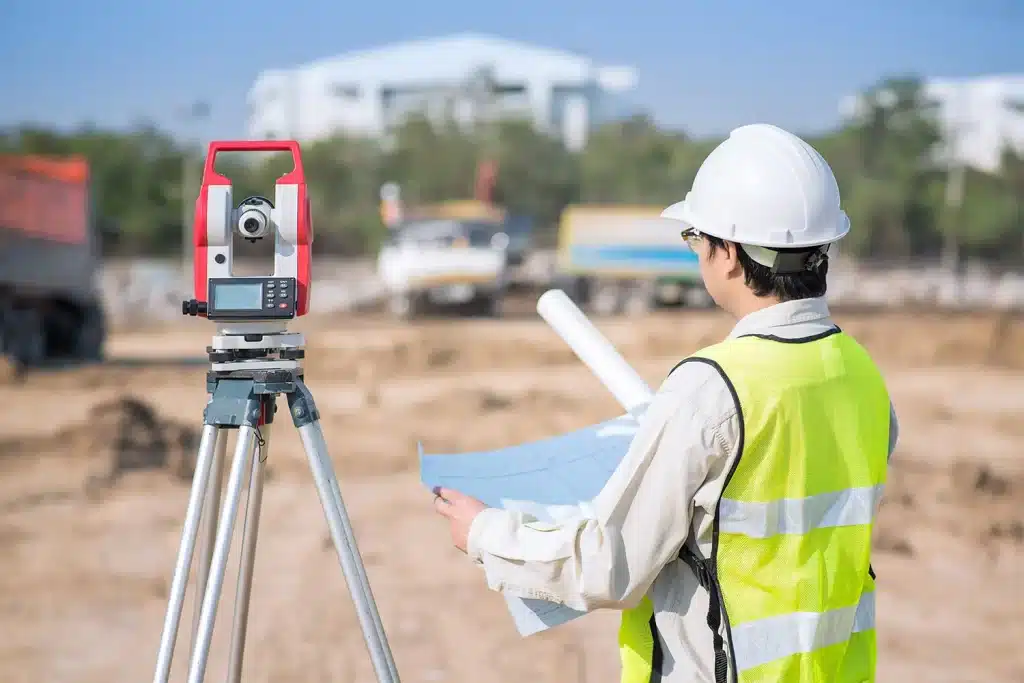
Good data saves money and headaches. Accurate ground models, machine control for graders and routine UAV capture give teams a live picture of the site. Regular drone inspection in Perth spots stockpile creep, erosion and safety issues early. That means fewer site visits, fewer retakes and fewer truck movements. When the set-out is right the first time, WSUD features get built to the levels they need, and as-constructed checks are faster.
If you are working near the Swan or Canning rivers, talk to the Department of Biodiversity, Conservation and Attractions (DBCA) early. The Swan Canning Development Control Area has its own approval pathway and policies to protect the river system. Early contact reduces redesign and delay.
What this means for developers
- Plan WSUD from day one. Use the state guidance to size soakwells, basins and raingardens and to map overland flow. It is much cheaper to set street and lot levels right at concept stage than to retrofit later.
- Treat trees like essential infrastructure. Protect good specimens, fit the verge for large trees, and publish a canopy plan with species, watering and maintenance so it holds through construction. The 30% canopy direction sets the tone.
- Put embodied carbon in the brief. Ask for Environmental Product Declarations where available, specify low-carbon concrete that meets AS 1379, and compare options with a consistent carbon method.
- Use a precinct rating to keep promises visible. Green Star – Communities gives a shared language for consultants, contractors and council, and helps the community see real performance, not just marketing lines.
- Build a joined-up team. Planners, civil and environmental engineers, landscape architects and subdivision surveyors Perth should be involved early to align approvals, budgets and staging with the sustainability plan. When people search “site surveyor near me” online, they’re often looking for precisely this blend of planning sense and measurement accuracy.
What this means for communities
- Cooler, safer streets. More shade and better drainage make walking and cycling more appealing on hot days and after storms. The approach also supports local biodiversity.
- Less waste on site. Accurate surveying and routine UAV checks reduce rework, heavy vehicle movements and dust.
- Honest, trackable outcomes. Precinct targets create a clear line of sight from early drawings to finished parks, paths and homes, so residents can see progress and hold projects to account.
Also Read: Drone Mapping and Photogrammetry: A New Era for Surveyors
Final word
Perth can keep growing without losing the qualities people value. Start with water-smart streets, protect and plant for shade, pick lower-carbon materials, set precinct-wide goals, and measure carefully. With those five habits in place, projects are more resilient, easier to deliver and better to live in.